
Search Scott County Public Records
Scott County Public Records are easiest to handle when you start with Huntsville and the office that likely holds the file. The county is centered in the northern Cumberland Plateau, and the county seat houses the administrative offices. Scott County’s public records page also gives you a direct request path, which is the cleanest way to start when you need a deed, a meeting file, or another county record. If you know the office, the date, or the file type, you can keep the request short and avoid a long search across the whole county site.
Scott County Public Records Overview
The Scott County public records page at scottcounty.com/government/public-records/ is the county's most direct access path. The page states that the Tennessee Public Records Act gives Tennessee citizens the right to access open records that exist at the time of the request. It also names a Public Records Coordinator, Ruth Harness, and provides a request form. That is unusually clear. It means a Scott County request can start at the county page instead of bouncing around the site first.
Scott County also uses the county government pages to show how the county works. The board of county commissioners meets on the third Monday of each month at the Scott County Office Building in Huntsville, and committees meet on the first Monday. The budget page explains that the county budget is prepared by the Department of Finance with the county mayor’s office and presented to commissioners. Those public pages are not records themselves, but they create the trail that later becomes a record request.
The Tennessee Open Records Counsel page at comptroller.tn.gov/about-us/learn-about-our-office/open-records-counsel.html is the state fallback shown below for Scott County Public Records, and the county page still gives you the public entry point when you are ready to file a request.
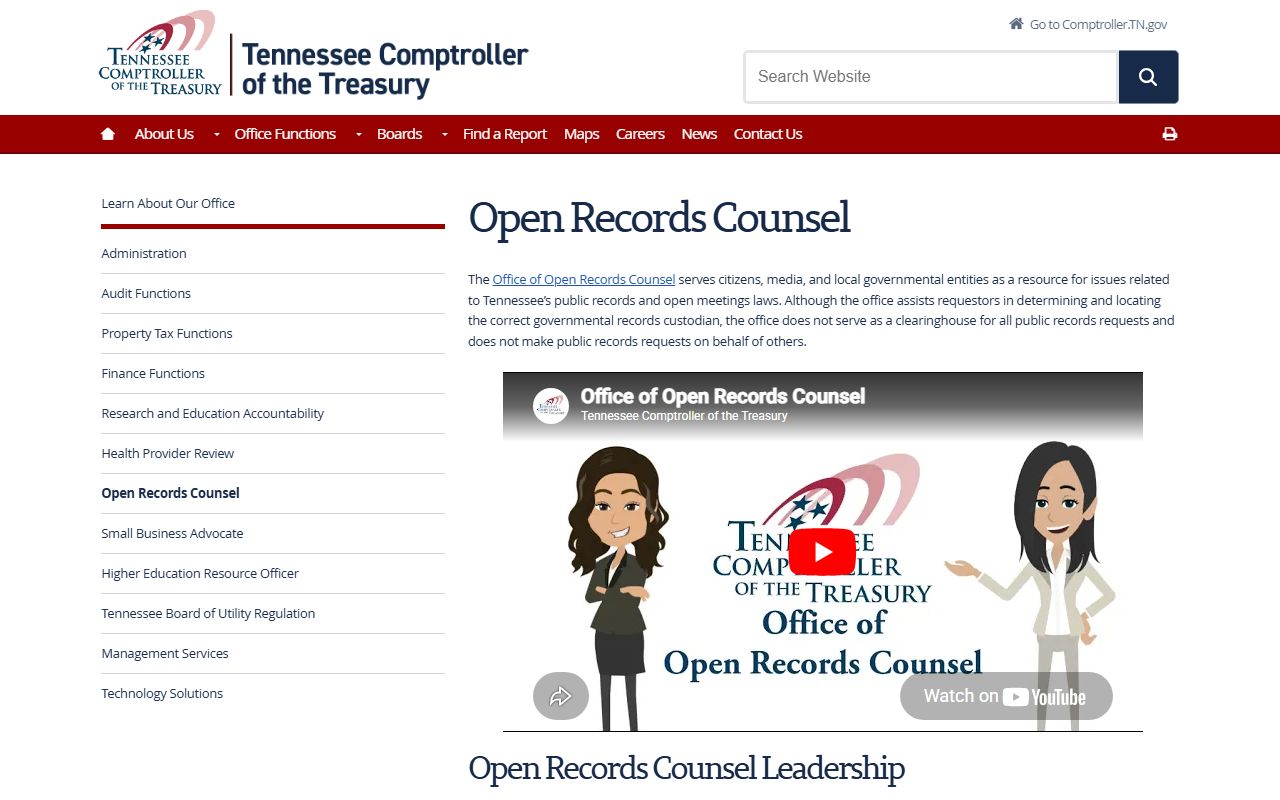
Because Scott County had no usable local manifest image, the Tennessee Open Records Counsel image is a practical fallback while the county page gives the request route.
Scott County’s public trail is visible even without a special records portal. The county office building, the county clerk, the register of deeds, the commission, and the budget pages all keep the request grounded in real county offices. That is enough to start with confidence.
Scott County Public Records Offices
Scott County Public Records usually move through a familiar set of county offices in Huntsville. The county clerk is a key starting point because it maintains the records of the legislative body and handles business taxes, motor vehicle registrations, licenses, and other civil duties. Marriage licenses and other routine papers also run through that office. That makes the clerk one of the easiest places to begin when the record is tied to county business rather than a private search site.
The register of deeds is the land record office. It records or files documents affecting real and personal property, including deeds, mortgages, liens, plats, and related material. The county commission page gives you a meeting trail, and the budget page gives you a current-year paper trail. The county mayor’s office and sheriff’s department add more local contact points when the record is tied to a county action or a civil paper. Once you know which office created the file, the search gets much cleaner.
Use the county office that matches the file.
- County Clerk for legislative body records, licenses, motor vehicle work, and routine county filings.
- Register of Deeds for deeds, mortgages, plats, liens, and property records.
- Board of County Commissioners for meeting records and public action trails.
- Budget for fiscal-year records and county budget history.
That office map keeps Scott County Public Records searches direct and keeps the request aimed at the right desk the first time.
Scott County Public Records And Meetings
Meetings are a major clue in Scott County Public Records work because the commission and committee schedules are public and regular. The county commission meets on the third Monday of each month at the Scott County Office Building in Huntsville, and committees meet on the first Monday. The budget page also shows how county finance work is tied to commission action. That means a meeting date is often the best way to find the file behind a county decision.
Scott County also keeps a clear public trail through its county mayor’s office page. The page links to the county commission, the county clerk, the register of deeds, the county attorney, the sheriff, the budget page, and the public records page. That office structure matters because a budget item, a county action, or a public notice can turn into the paper trail you need later. The county is not hiding the record path. It is publishing it.
The Scott County about page at scottcounty.com/welcome/about-scott-county/ also helps because it says Huntsville is the county seat and houses the county’s administrative offices. That gives the public records search a real center and a real place to begin.
Scott County Public Records And State Help
The Tennessee Public Records Act page on Scott County’s site is the cleanest starting point because it explains the right of access and provides a request form. Still, state help matters when the file is older or the office path is not obvious. The Tennessee Open Records Counsel can help point you to the right desk. The county page itself is already strong, but the state support helps when you need a second set of eyes on the request.
For older Scott County Public Records, the Tennessee State Library and Archives Scott County fact sheet is the strongest historical fallback. It says Scott County was formed in 1849 from Anderson, Campbell, Fentress, and Morgan counties, the county seat is Huntsville, there was a courthouse fire in 1946, and the earliest records include marriages from 1854, wills from 1892, deed index from 1850, chancery court minutes from 1858, county court minutes from 1850, circuit court minutes from 1850, and tax books from 1875. That gives you a real record history to work with when the file is old.
Scott County’s public records work is strongest when local offices and state archives are treated as one trail. The county page gives you the current request route. The fact sheet gives you the historical map. The result is a cleaner request and fewer blind alleys.
Search Scott County Public Records
A good Scott County Public Records search starts narrow and stays that way. Begin with Huntsville and the public records page. Write down the office name if you know it. Add the month, year, or file name if that helps. If the record is tied to the county clerk, use that office. If it is tied to land records, use the register of deeds. If it is tied to meeting work, use the commission or budget page. That order keeps the search local and helps you avoid a round of back and forth with the wrong office.
Use this short path when you are ready to ask for a file:
- Start with the county public records page and the request form.
- Use the County Clerk for legislative body records, licenses, and routine filings.
- Use the Register of Deeds for deeds, mortgages, liens, and plats.
- Use the Board of County Commissioners or Budget pages for meeting and fiscal records.
- Use TSLA when the record is older, damaged, or tied to the courthouse fire history.
That approach fits Scott County because the public-facing site already gives you the request path, but the real record trail is still office specific. A focused request usually gets a better answer the first time.
Accessing Scott County Public Records
Access under Scott County Public Records follows Tennessee’s open-records framework. Public records are open unless a separate law keeps them confidential, and the office can ask for enough detail to locate the file. That is why the practical work is not just asking for records. It is naming the right county office and the right record type so the search can stay short and clear. If you already know the office, the date range, or the file name, the request gets much easier to route.
Scott County’s public record trail also shows how county government, meetings, clerk work, and state help fit together. The county public records page gives you the request route. The commission and budget pages give you the date trail. The county clerk and register of deeds give you the custodian. The more direct the ask, the easier it is for the county to answer it. Note: Scott County records can require a written request or a little follow-up, especially when the file is older or tied to a meeting, archive, or court trail instead of a single office counter.
Huntsville gives the county its center, and the public records page gives you the legal path. That combination keeps Scott County Public Records practical to search without guessing.