
Find Moore County Public Records
Moore County Public Records are easiest to handle when you start with the Lynchburg office that likely holds the file. The county site is down, so the best anchors are the Tennessee State Library and Archives fact sheet, the county clerk directory, and the state request tools that keep the search focused. The Moore County fact sheet says the county seat is Lynchburg, and the state clerk directory lists the County Clerk there too. That gives you a real place to begin when you need a deed, a court minute, or another county paper and the live county portal is not available.
Moore County Public Records Overview
The Moore County fact sheet at sos.tn.gov/tsla/pages/genealogical-fact-sheets-about-moore-county is the clearest local history source when the county portal is down. It says Moore County was formed in 1871 from Bedford, Franklin, and Lincoln counties, and it identifies Lynchburg as the county seat. That is not just history. It is a guide to the public record trail. A county seat gives you a place to start, and a formation act tells you why the county's record base begins later than some older Tennessee counties.
The Tennessee Revenue county clerk directory at tn.gov/revenue/title-and-registration/county-clerks-locations.html gives Moore County a current office anchor. It lists County Clerk Lacy Ivey at 196 Main St. in Lynchburg. That is the practical public door for routine county filing questions when the county website is unavailable. The clerk directory does not replace a county portal, but it gives you a working office and a working address in the county seat.
A visit to the Tennessee Open Records Counsel at comptroller.tn.gov/about-us/learn-about-our-office/open-records-counsel.html gives Moore County requesters a clear state access page when the county site is down.
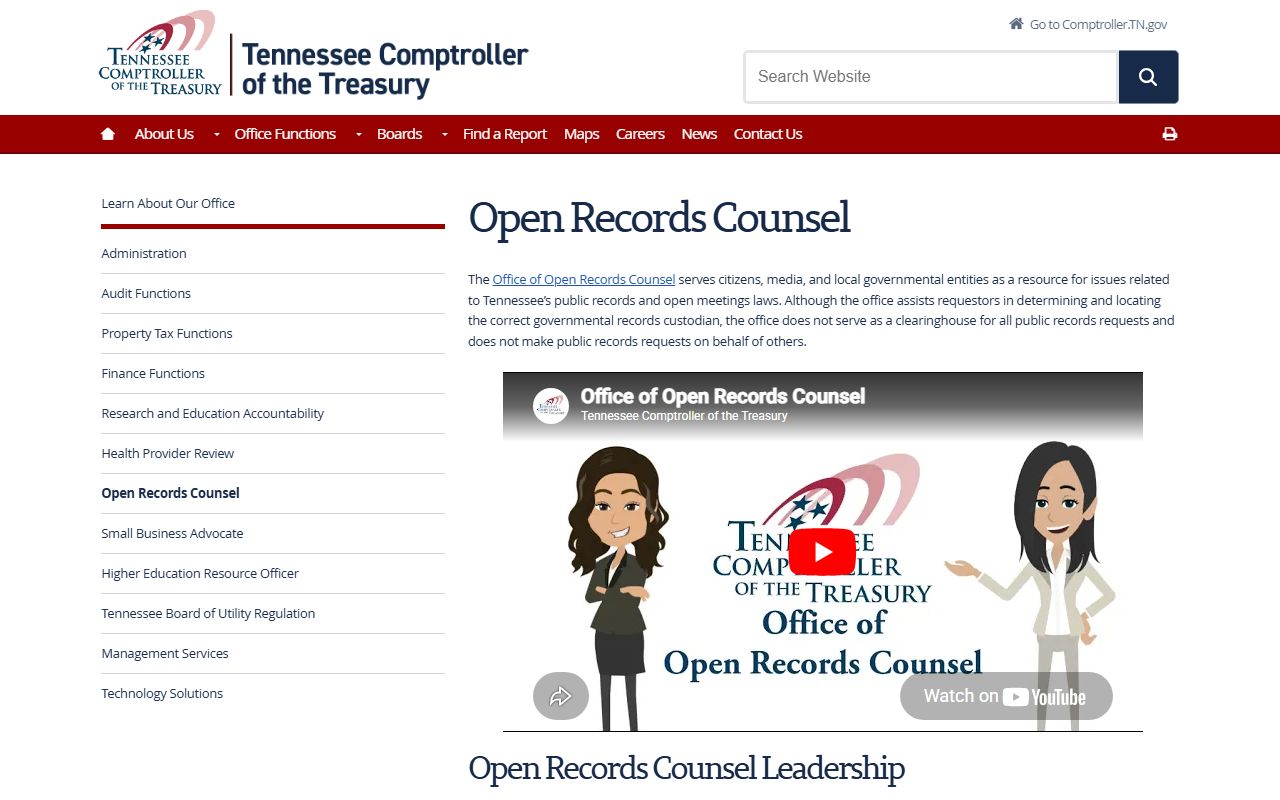
That state access image is useful when the local portal is down and the county record trail needs a clear starting point.
Moore County Public Records in Lynchburg
Lynchburg matters because it is the county seat and the place where the Moore County Clerk is listed. That makes it the first practical stop for many Moore County Public Records questions. If you need a county filing, a license trail, or a point of contact for a local paper, Lynchburg gives you a real address instead of a vague county name. The county clerk directory is especially helpful when the live county site is not available, because it turns a general county question into a specific office contact.
That office path matters more in Moore County because the state fact sheet shows a strong local record base on microfilm. The earliest records include marriages from 1872, wills from 1872, deed index records from 1872, chancery court minutes from 1872, county court minutes from 1872, circuit court minutes from 1872, and tax books from 1872. That is a useful public records map. It tells you the county has a solid historical trail, but it also shows that older files may need TSLA or another archive path instead of a live county page.
When the county seat and the office line up, the request gets simpler. You are not asking the county to guess. You are pointing to Lynchburg, naming the file type, and narrowing the date range. That is the cleanest way to keep the search local.
Moore County Public Records and History
Moore County Public Records also make more sense when you think about the county's history. The fact sheet says the county was established in 1871 from Bedford, Franklin, and Lincoln counties, so its public records begin later than older nearby counties. That later start is useful because it explains why the archive trail is compact and clearly tied to the Lynchburg seat. The county's formation act and early record inventory are part of the same access story.
The state archive notes for Moore County are especially useful because they point to the earliest surviving records. Those include marriages, wills, deed index records, chancery court minutes, county court minutes, circuit court minutes, and tax books, all from 1872. That is the kind of detail that tells you whether a request should go to a current office or to TSLA. A record request is much better when the historical path is already clear.
The same fact sheet also points requesters toward published county histories and local records in Lynchburg. That is a good sign for anyone trying to locate older Moore County Public Records. It means the state archive already expects Moore County to be searched in layers, not as one flat file cabinet.
Moore County Public Records and State Help
When the county site is unavailable, state help becomes the main access path for Moore County Public Records. The Tennessee Open Records Counsel can help you frame a request, and the Tennessee Comptroller public records request page can help you write it in a way that names the office and the file type clearly. Those tools matter when the county office is known but the live website is not cooperating. They also help when the record needs a state fallback because it is older or archived.
A visit to the Tennessee State Library and Archives at sos.tn.gov/tsla gives Moore County requesters a clean fallback when older records move out of the active office stack. The archive page is especially useful when you need microfilm, old minutes, or a historical file that no longer sits at the county counter.
That same archive trail is why the fact sheet matters. It tells you what records exist on microfilm and what the earliest surviving office records look like. That lets you decide whether to call the County Clerk in Lynchburg, contact TSLA, or use the Comptroller's request tools first.
For court history, the Tennessee courts public case history portal is another useful backup when a county matter moves beyond the local office. That gives Moore County requesters a full path from office, to archive, to court history when the file trail is not simple.
Search Moore County Public Records
A good Moore County Public Records search starts narrow and stays that way. Begin with Lynchburg, the County Clerk, or the county fact sheet if you need context first. Write down the office name if you know it. Add the month, year, or file name if that helps. If the file is tied to a deed, a court minute, or a county filing, say so. The more direct the ask, the easier it is for the custodian to answer it.
Use this short path when you are ready to ask for a file:
- Start with the County Clerk in Lynchburg when you need a county filing or routine public record.
- Use the Moore County fact sheet when you need historical context for old records.
- Use TSLA when the file is older, archived, or on microfilm.
- Move to the Tennessee Comptroller or Open Records Counsel when the custodian is unclear.
- Use the Tennessee courts portal when a matter moves into higher court history.
That approach fits Moore County because the county site is down, but the office trail is still clear once you start with the right state-backed source. A focused request usually gets a better answer the first time.
Accessing Moore County Public Records
Access under Moore County Public Records follows Tennessee's general open-records rule. Public records are open unless a separate law keeps them confidential, and the office can ask for enough detail to locate the file. That is why the practical work is not just asking for records. It is naming the right county office and the right record type so the search can stay short and clear. If you already know the office, the date range, or the file name, the request gets much easier to route.
Moore County's public record trail also shows how the county seat, the clerk directory, and TSLA fit together. Lynchburg gives you the office location. The fact sheet gives you the county history and record history. State tools help when the local site is down or older material has moved out of the active stack. Note: Moore County records can require a written request or a little follow-up, especially when the file is older or tied to archived microfilm rather than a current office counter.
Moore County is one of the clearest examples of why the archive path matters. If the county seat is Lynchburg and the earliest records begin in 1872, a requester should expect the county clerk and TSLA to do most of the work. That keeps the search practical and grounded in the way the county's records actually survived.