
Search Monroe County Public Records
Monroe County Public Records are easier to sort when you start with Madisonville and the office that likely holds the file. Monroe County's official site puts commission minutes, agenda pages, the county clerk, register of deeds, judicial pages, property assessor information, and public contact paths in one place. That gives you a real starting map instead of a blank county label. If you know the date, the office, or the file type, the request can stay narrow. That helps when the county page is thin or when you need a second route through state records support.
Monroe County Public Records Overview
The Monroe County government site at monroetn.gov is the county's official front door for Monroe County Public Records. The county portal keeps the records trail in the open with county commission minutes, agenda pages, elected office pages, and contact paths that lead to real custodians. That matters in Madisonville because a public request works best when the office and the file type stay aligned. The site is not a private archive. It is the public map that shows where the record likely lives.
The county commission minutes page at monroetn.gov/county-commission-minutes/ shows how Monroe County keeps meeting records visible. That is useful when a request begins with a meeting and ends with a packet, minutes, or agenda item. Monroe County also publishes a monthly commission meeting trail, so the public can follow county action without guessing where the file came from.
A look at the Monroe County commission minutes page matches the county record trail even when you only have a meeting date to start from.
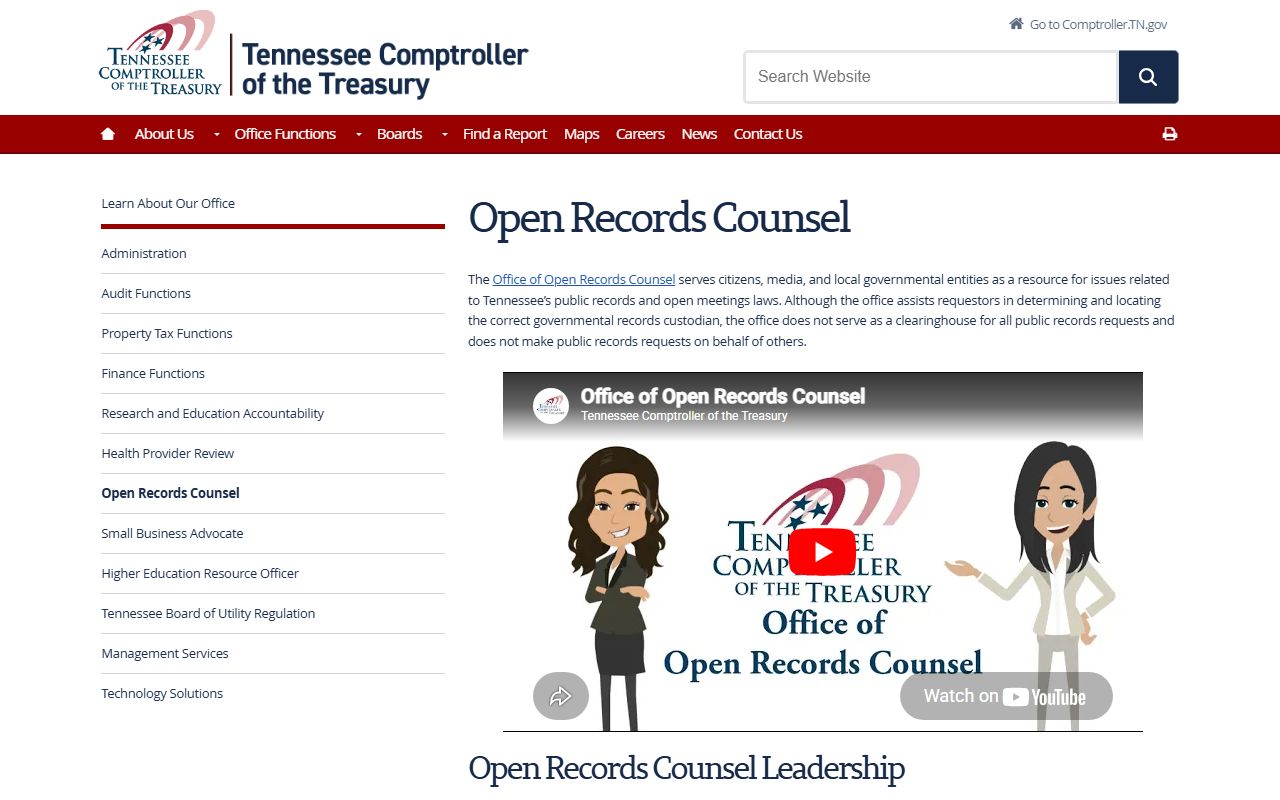
Because Monroe County may require a second route for older files or harder to place papers, the Open Records Counsel image gives requesters a clean state fallback right away.
Monroe County Public Records Offices
Monroe County Public Records are routed through a set of familiar county offices in Madisonville. The County Clerk is a key public desk because it serves as secretary to the County Commission and handles title and registration, business tax, motel-hotel tax, marriage licenses, genealogy research, boat and water vessel tax, beer applications, annual beer tax, tag renewals, notary applications, and driver's license renewals. That mix makes the County Clerk one of the best starting points for routine county records and public filing questions.
The Register of Deeds is the land record office. Monroe County records date back to 1820, and the office handles deeds and other recorded documents tied to real property. The judicial pages split the court lane into Circuit Court Clerk, Clerk and Master, Criminal, General Sessions, Juvenile, Chancery, Probate, and Child Support functions. The Property Assessor page helps with property questions and tax trail context. Once you know which office created or stores the file, the request gets much cleaner.
Use the county office that matches the file.
- County Clerk for commission minutes, titles, licenses, renewals, and routine county filings.
- Register of Deeds for real property records and older land documents dating back to 1820.
- Judicial for the circuit court clerk, clerk and master, and court case lanes.
- Property Assessor for property questions and the valuation trail tied to county records.
That office map keeps Monroe County Public Records searches direct and keeps the request aimed at the right desk the first time.
Monroe County Public Records And Meetings
Meeting records are a major part of Monroe County Public Records because county commission activity is posted in a visible public lane. The county commission minutes and agenda pages let you track the date, the meeting cycle, and the public action that created the paper trail. That matters when a request starts with a broad topic and needs to be narrowed to one meeting or one packet. A county that publishes meetings and minutes is telling you where to begin.
Monroe County also keeps the public's path simple by pairing meeting pages with elected-office pages and a general contact page. If you are trying to find a commission packet, a minute book, or a public action item, the date is often the most useful clue. That keeps the search focused and saves time. It also keeps a request from turning into a broad county-wide search that is hard for the custodian to answer cleanly.
When you can name the meeting, the office, and the month, Monroe County Public Records become much easier to route. The county already publishes the trail. The job is to ask for the right part of it.
Monroe County Public Records And State Help
The Tennessee Public Records Act begins with T.C.A. § 10-7-503, which is the core rule that keeps public records open unless another law says otherwise. For Monroe County Public Records, that means the request works best when it names the office, the file type, and the date range. The law gives the right of access, but the custodian still needs enough detail to find the record without guessing. A short request is usually stronger than a broad one.
If the local custodian is not obvious, the state open-records help page can point you to the right desk. The Tennessee Comptroller public records request page is also useful because it shows how to frame a clean request before you send it. Those state tools are not a replacement for Monroe County offices, but they do make the local search easier to start and easier to explain when the county page does not say enough.
For older Monroe County Public Records, the Tennessee State Library and Archives is the strongest fallback. TSLA can help with older county material and records that are no longer kept in the active office stack. Monroe County's record trail also fits a common Tennessee pattern: county records first, state help second, and the specific custodian always at the center of the request.
A look at the Tennessee Open Records Counsel page at comptroller.tn.gov/about-us/learn-about-our-office/open-records-counsel.html gives Monroe County requesters a reliable state backup when the local trail is thin or the office is not obvious.
That state guidance is useful when the county page is hard to place or when the record needs a tighter request before the custodian can respond.
Search Monroe County Records
A good Monroe County Public Records search starts narrow and stays that way. Begin with the county portal or the office page that should hold the file. Write down the office name if you know it. Add the month, year, or file name if that helps. If the file is tied to a deed, a meeting item, or a court matter, say so. That order keeps the search local and helps you avoid a round of back and forth with the wrong office. It also fits the way Monroe County already publishes meetings and office pages.
Use this short path when you are ready to ask for a file:
- Start with the county office or county page that should hold the record.
- Use the County Clerk for commission minutes, licenses, renewals, and routine filings.
- Use the Register of Deeds for real property records and older land documents.
- Use the Judicial pages for circuit court, chancery, probate, juvenile, or criminal records.
- Move to the Tennessee Comptroller or Open Records Counsel when the custodian is unclear.
That approach fits Monroe County because the public-facing site is broad, but the real record trail is still office specific. A focused request usually gets a better answer the first time.
Accessing Monroe County Public Records
Access under Monroe County Public Records follows Tennessee's general open-records rule. Public records are open unless a separate law keeps them confidential, and the office can ask for enough detail to locate the file. That is why the practical work is not just asking for records. It is naming the right county office and the right record type so the search can stay short and clear. If you already know the office, the date range, or the file name, the request gets much easier to route.
Monroe County's public record trail also shows how county meetings, clerk work, land records, and state help fit together. The commission pages give you the date trail. The clerk and deeds pages give you the custodian. State tools help when the local page is thin or older material has moved out of the active office stack. The more direct the ask, the easier it is for the custodian to answer it. Note: Monroe County records can require a written request or a little follow-up, especially when the file is older or tied to a meeting page instead of a single office counter.