
Search Hamilton County Public Records
Hamilton County public records move through more than one office, so the first step is matching the record to the right custodian. In Chattanooga, the county portal, the County Clerk, the Circuit Court Clerk, the Register of Deeds, and the Property Assessor each hold a different piece of the record trail. Some searches are quick and public. Others need a name, a date, a parcel number, or a case number. This page keeps the local paths together so you can move from a broad search to the exact office without guessing at every step.
Hamilton County Quick Facts
Hamilton County Public Records Overview
Hamilton County Government uses its main portal to route residents to records, forms, and service pages. The site includes resources and applications for business, construction, property, and environment. It also points to county building and roadway maintenance information, driver and vehicle forms, health resources, marriage license pre-application, quick links for child support, court fees, and property taxes, polling locations, voter registration information, K-12 education tools, college resources, county policies, financial reports, and open records requests. That mix makes the county portal a good first stop when you are not yet sure which office owns the file.
A linked look at Hamilton County Government shows the county's main public records hub and the local office structure behind it.
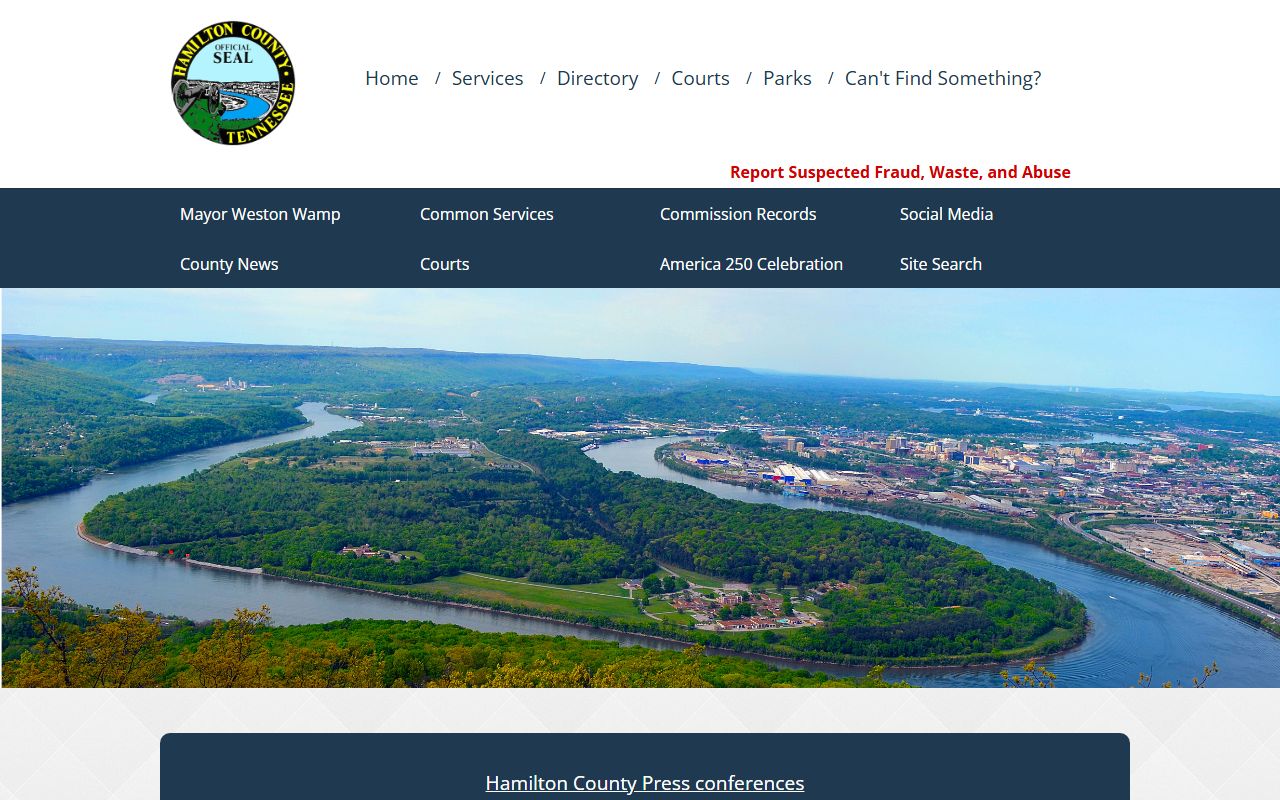
That portal is where Hamilton County sends people who need office contacts, record policies, and the starting point for a narrow request.
Hamilton County also has a long record trail. The county was founded in the early 1800s, and the clerk's office has spent years digitizing marriage licenses, County Court and Council Legislative Body minutes, and County Commission records. That makes the county useful for both recent searches and older county action records. When you know the office and the record type, the search gets much easier.
Hamilton County Clerk Records
The Hamilton County Clerk's Office sits at 625 Georgia Avenue, Room 101, in Chattanooga. Bill Knowles has served as County Clerk since 1974, and the office is known for building Tennessee's first online tag renewal system. That local history matters because the clerk's office is not just a place for tags. It also keeps marriage licenses, County Court and Council Legislative Body minutes, and County Commission records in digitized form. For many Hamilton County public records searches, this office is the fastest local stop.
The clerk office handles vehicle registration and renewal, title services, driver license renewals, Real ID applications, and self-service tag renewal kiosks in outlying areas. It also has a satellite office at Bonny Oaks. Those services show why a county clerk search can blend records and public service work. If you need a marriage record, a county minute, or a tag-related paper trail, the clerk is often the right first call.
| Office | Hamilton County Clerk |
|---|---|
| Address | 625 Georgia Avenue, Room 101, Chattanooga, TN 37402 |
| Phone | (423) 209-7934 |
| Services | Marriage licenses, county minutes, vehicle renewal, title services, driver license renewals, and Real ID applications |
A county records search at the clerk often starts with a name and a date. If you have both, the office can move faster. The clerk's digitized files also help when you need a county action record without hunting through paper stacks first. That is a practical win for anyone trying to keep a Hamilton County public records request narrow.
Useful clerk records here include county commission minutes, county court actions, marriage licenses, tag renewal records, and public policy material tied to county operations. If your search is about county government rather than the courts, this office is usually the best fit.
Hamilton County Public Records at Court
The Hamilton County Circuit Court Clerk keeps court records at 625 Georgia Avenue, Room 500. The office handles the court-side record trail for civil and family law cases, and the county court records research notes that family law matters can include adoptions, marriage-related filings, and other domestic court actions. Tennessee residents can access most family law case records unless the case involves minors or another protected filing. That is a useful distinction when you are sorting a Hamilton County public records request that sounds simple but actually needs a court custodian.
The court records page at Hamilton County Court Records is a useful research reference for how Hamilton County public records move through the circuit and chancery courts.
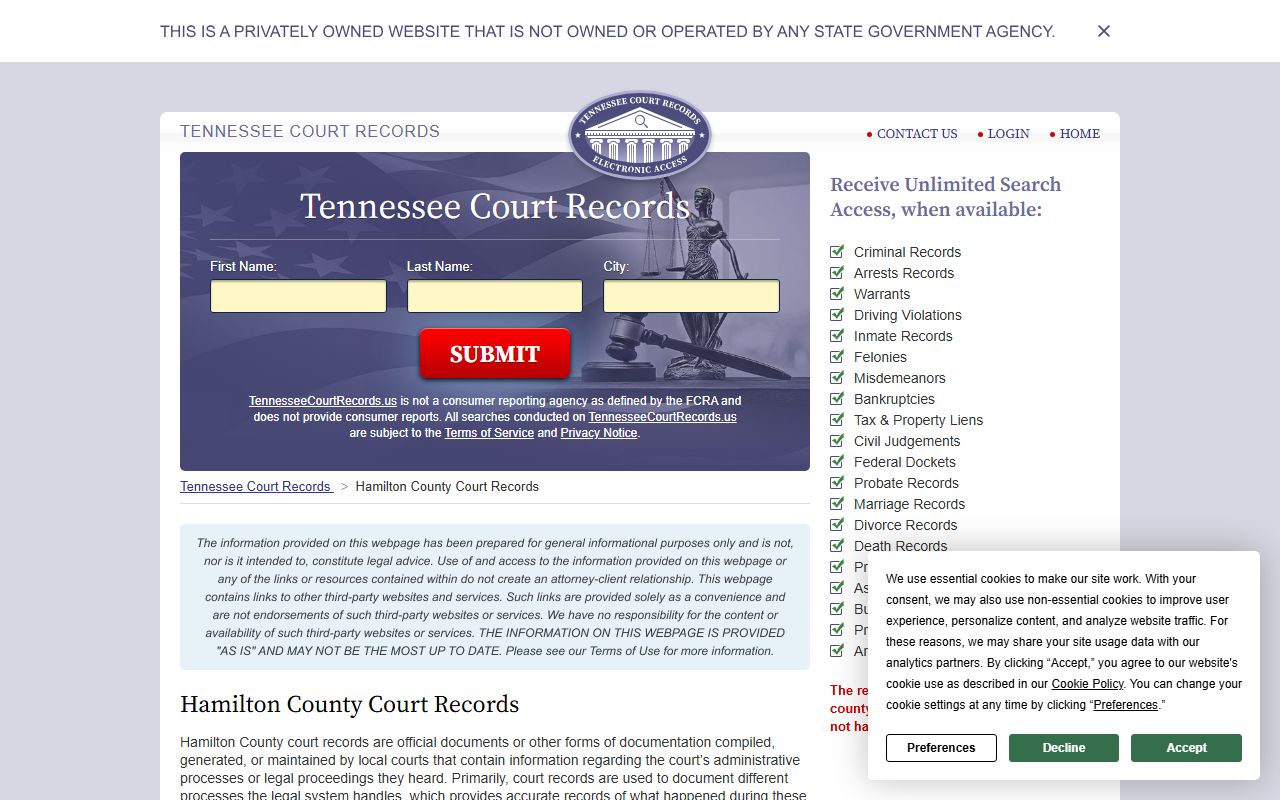
That page helps explain why some records stay public, while others are limited because the case touches a minor or another protected category.
The Hamilton County Circuit Court Clerk can be reached at 423-209-6700, and the Chancery Court sits at 625 Georgia Avenue, Room 300, with phone number 423-209-6600. Those two offices handle different parts of the court trail, but both matter when a search starts with a case history. If you need a court file, use the office that matches the case type. If you need family law records, the circuit clerk is the usual starting point. If you need a chancery matter, the chancery office is the better fit.
The Hamilton County Health Department at 921 E 3rd Street, Chattanooga, can help point residents toward local health-side record issues, while the Tennessee Department of Health Office of Vital Records handles the statewide certificate side. That split matters when a search needs a certificate instead of a full court file. Public access is stronger when you know which office keeps the paper.
Hamilton County Public Records and Property
The Hamilton County Register of Deeds sits at P.O. Box 1639 in Chattanooga and handles the property side of Hamilton County public records. That office records and preserves the instruments that affect real estate, and it is one of the main stops for deeds, liens, and other land papers. The Property Assessor, located at 6135 Heritage Park Drive, helps with property data, and the county portal routes residents to construction, property, and environment information when a search starts with land or land use instead of a court filing.
For property searches, the record type matters more than the neighborhood. A deed, a lien, a plat, and a property assessment each live in a different lane. The Register of Deeds is the right place when the paper was recorded. The Assessor is the better fit when you need parcel data or property information. That split is normal in Tennessee and keeps Hamilton County public records organized by function rather than by guesswork.
| Office | Hamilton County Register of Deeds |
|---|---|
| Mailing Address | P.O. Box 1639, Chattanooga, TN 37401 |
| Phone | (423) 209-6560 |
| Related Office | Hamilton County Property Assessor, 6135 Heritage Park Drive, Chattanooga, TN 37416, (423) 209-7300 |
Hamilton County public records tied to property often move quickly once you have the owner name, the legal description, or the approximate recording date. Those details are enough to narrow a deed or lien search and cut down on the back and forth. If you do not know which office owns the file, start with the county portal and then move to the deed or assessment desk.
Hamilton County Public Records Requests
Hamilton County public records requests sit under the Tennessee Public Records Act. Under T.C.A. § 10-7-503 and T.C.A. § 10-7-121, county records are open unless another law makes them confidential. Under T.C.A. § 10-7-505, the custodian can charge reasonable copy fees and may need time to gather the record. That is why a focused request works better than a broad one. The county portal also gives residents access to open records policies and requests, which is a useful local starting point when the office is not obvious.
The Tennessee Office of Open Records Counsel helps requesters find the right custodian and understand local access rules. It does not file the request for you, but it can help when a Hamilton County record is split between offices. The Tennessee State Library and Archives is the next stop for older county minutes, historic court material, and records that no longer live in the day-to-day office file room. If you need a state health certificate, the Tennessee Department of Health Office of Vital Records is the official state path.
When a request is still fuzzy, use the right custodian name, the approximate date, and the record type. That combination helps more than a long story. It also fits the Tennessee public records system better than a generic ask.
Use this order when you are not sure where the file lives:
- Start with the county office that created or keeps the record.
- Move to the circuit or chancery clerk if the file is a court record.
- Use the Register of Deeds for recorded land papers.
- Check TSLA for older county or court material.
- Ask Open Records Counsel if the custodian is unclear.
That sequence keeps a Hamilton County public records search clean. It also avoids the common mistake of sending a county request to a state office that does not keep the paper you need.
Hamilton County Public Records Access Tips
Hamilton County public records are easiest to find when you keep the request narrow. Use the office name, the record type, and a date or number if you have one. County minutes and marriage records belong with the clerk. Court files belong with the circuit or chancery clerk. Deeds and liens belong with the Register of Deeds. Assessment questions belong with the Property Assessor. That is the basic map, and it works because the county already divides the work that way.
A search can also change based on the age of the record. Recent records are more likely to be in a current office system. Older records may sit in TSLA or in archived county files. That difference matters when you are looking for something that is no longer part of the active daily workflow. It is also why a good Hamilton County public records request gives the office enough detail to choose the right box, book, or database.
Hamilton County's mix of county services, court files, property records, and marriage records gives residents a wide records trail. Once you know where the trail begins, the rest is mostly a matter of following the right office.