
Find Fentress County Public Records
Fentress County Public Records are easiest to handle when you begin with the county office, the public records request form, or the page that keeps the file. The county government site gives residents a direct path to local offices, and the county's public records policy shows how the request is meant to move through the system. That matters when the record is tied to county government, land, or a court file. A short request with the office name and the date range is usually the cleanest way to reach the right document without bouncing between desks.
Fentress County Public Records Overview
The county home page at fentresscountytn.gov is the main public front door for Fentress County Public Records. It shows the county as a place where public contact still runs through official offices, not a random search result. That is important because Fentress County also posts a public records policy and a request form on its own site. Those pages show that the county expects records questions to be handled through a clear path, with a named request process instead of guesswork.
The county's public records policy at fentresscountytn.gov/wp-content/uploads/2023/03/POLICY-Public-Records.pdf gives the county's own structure for public access. The request form at fentresscountytn.gov/wp-content/uploads/2023/03/Records-Request-Form.pdf gives you the shape of the ask. That pairing matters because public records work best when the county knows what office to check and what file you want to see. If you know the office and the month, the search stays short and local.
A look at the county home page matches the image below and gives you the county's own entry point for Fentress County Public Records.
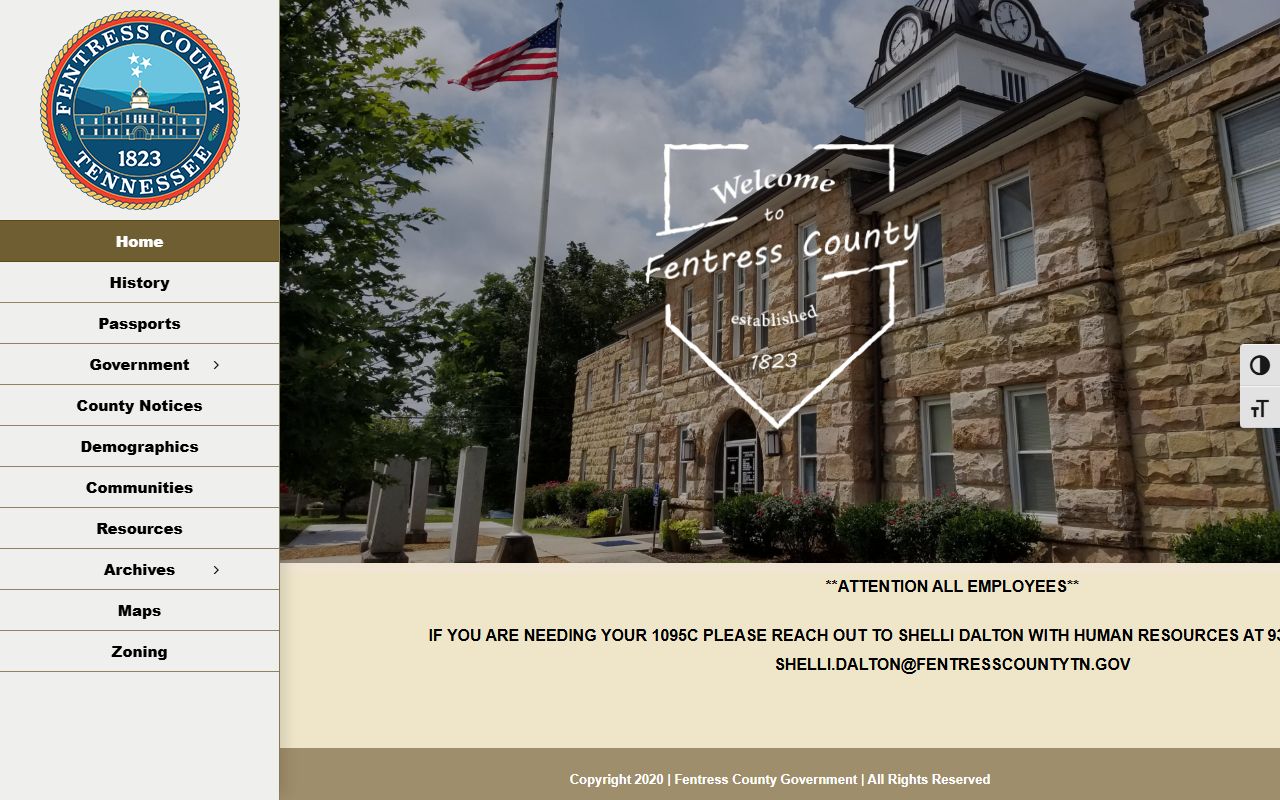
That portal is the best starting point when you want the county's own path instead of a broad web search that may miss the office that actually holds the file.
Fentress County Public Records Offices
Fentress County Public Records usually move through a few familiar offices. The county clerk handles a wide range of public-facing county work, including copies, forms, and service records tied to the office. The register of deeds preserves recorded land instruments and other papers that give public notice. The circuit court clerk keeps the court side of the record trail. That mix is the core of most local searches, because the office tells you where the file lives before you ever ask for a copy.
The county clerk page at fentresscountytn.gov/county-clerk/ is useful when the request starts with routine county business or a form that passed through the clerk's office. The register of deeds page at fentresscountytn.gov/register-of-deeds/ is the place to start for deeds, liens, leases, plats, or other recorded papers. The circuit court clerk page at fentresscountytn.gov/circuit-court-clerk/ is the better lane for circuit, juvenile, criminal, and general sessions records. Those are different records, and the custodian matters.
Use the office that matches the file.
- County clerk for routine county business, forms, and service records.
- Register of deeds for deeds, liens, plats, and other recorded papers.
- Circuit court clerk for court files, dockets, and case history.
- County government pages for notices or actions tied to county business.
That office map keeps Fentress County Public Records searches direct and keeps the request pointed at the right desk the first time.
Fentress County Public Records Request Path
The county's public records policy and request form make the local path clearer than a broad phone call ever would. The policy gives the county's own process, and the request form shows the basic shape of the ask. That is useful when the file is not already indexed online, because it helps you keep the question narrow and keep the search tied to a real office.
Fentress County's home page also gives a public contact structure that points back to county offices. That is the right way to think about the request. The county policy names a public records request coordinator, and the form gives the county a simple way to route the file. A short request works best when it names the office, the record type, and the date range if you know it. If you only need to inspect the file, say that. If you need a copy, make that clear too.
The county site also shows that records questions are not one size fits all. A marriage form, a deed, a court file, and a county notice do not live in the same place. When the office is clear, the request gets better. When the date is clear, the answer comes faster. That is what makes the Fentress County path workable even when the website is broad and the file itself is more specific.
Fentress County Public Records And State Help
Tennessee public records law starts with the Comptroller's public records request page and the open-records guidance at the Tennessee Open Records Counsel. Those state pages help when the local desk is not obvious or when the county request needs to be written in a cleaner way. They do not replace Fentress County offices, but they make the first request easier to shape and easier to route.
For older Fentress County Public Records, the Tennessee State Library and Archives is the strongest fallback. TSLA can help with older county material and records that no longer sit in the active office stack. If the search moves into appellate or higher court history, the Tennessee courts public case history portal at tncourts.gov/courts/supreme-court/public-case-history gives another public route. That is useful when the file has moved beyond the local office shelf and into the broader court record trail.
Fentress County works well with those state tools because the county's own website already points toward formal records handling. The state help fills the gap when you need a clean request shape, a deeper archive, or a path to older court history that is no longer in the active stack. That keeps the search local without trapping it inside one office.
Search Fentress County Records
A good Fentress County Public Records search starts narrow and stays that way. Begin with the county home page or the office that should hold the file. Write down the office name if you know it. Add the month, year, or form title if that helps. If the file is older, move to TSLA. If the question is about request shape, use the county policy and the Comptroller guidance before you send a long message. That order keeps the search local and helps you avoid a round of back and forth with the wrong office.
Use this short path when you are ready to ask for a file:
- Start with the county office or page that should hold the record.
- Use the county clerk, register of deeds, or circuit court clerk when the record type fits that office.
- Use the public records form when you want a clean written request.
- Move to the Tennessee Comptroller or Open Records Counsel when the custodian is unclear.
- Use TSLA when the record is older or no longer in the active office stack.
That approach fits Fentress County because the public-facing county site is broad, but the real record trail is still office specific. A focused request usually gets a better answer the first time.
Accessing Fentress County Public Records
Access under Fentress County Public Records follows Tennessee's general open-records rule. Public records are open unless a separate law keeps them confidential, and the office can ask for enough detail to find the file. That is why the practical work is not just asking for records. It is naming the right county office and the right record type so the search can stay short and clear. If you already know the office, the date range, or the form title, the request gets much easier to route.
Fentress County's public record trail also shows how county government, office forms, and state help fit together. The county home page gives you the map. The request form gives you the shape of the ask. State tools help when the local page is too general or the file is old. That is the right pattern for public records work in a county where the government site is broad and the office structure still matters most.
Note: Fentress County records can require a written request or a little follow-up, especially when the file is older, not indexed online, or tied to a county office page instead of a single file room.