
Search Nashville Public Records
Nashville public records are split across city, county, and state offices, so the first step is to match the record to the right custodian. The city portal gives you access to municipal records, service links, maps, and meeting information. The city clerk keeps ordinances, council minutes, and other legislative records. Police records and county court records add another layer. Because Nashville is part of consolidated Metro Nashville and Davidson County government, a good search often moves between city hall, the county courthouse, and the archive room before it is done.
Nashville Quick Facts
Nashville Public Records Overview
The main city portal at nashville.gov is the best first stop for Nashville public records. The site gives residents records requests, permits, payments, maps, and the most common civic links in one place. It also reflects the current city leadership and the broad metro service structure that shapes how Nashville records are organized. That matters because city records are not all filed in one room. Some live with the city clerk. Some sit with a police records unit. Some move to archive collections when they become historic.
Nashville is also the state capital, so the city records trail often intersects with state offices. A clean search starts with the city custodian, then moves outward only when the record trail demands it. If you are looking for a council minute, a police report, a city ordinance, or a city reference file, Nashville public records are usually easiest when you know which office created the paper in the first place. This page keeps that path clear.
The city portal also highlights NashvilleMaps, recovery resources, the Choose How You Move transportation program, and Metro Nashville Network video streams. Those features are not records by themselves, but they help you find meetings, districts, council information, and civic context that often sit next to the records you need.
The Nashville city portal page at nashville.gov is the main local source for Nashville public records access, city service links, and the first city-level search stop.
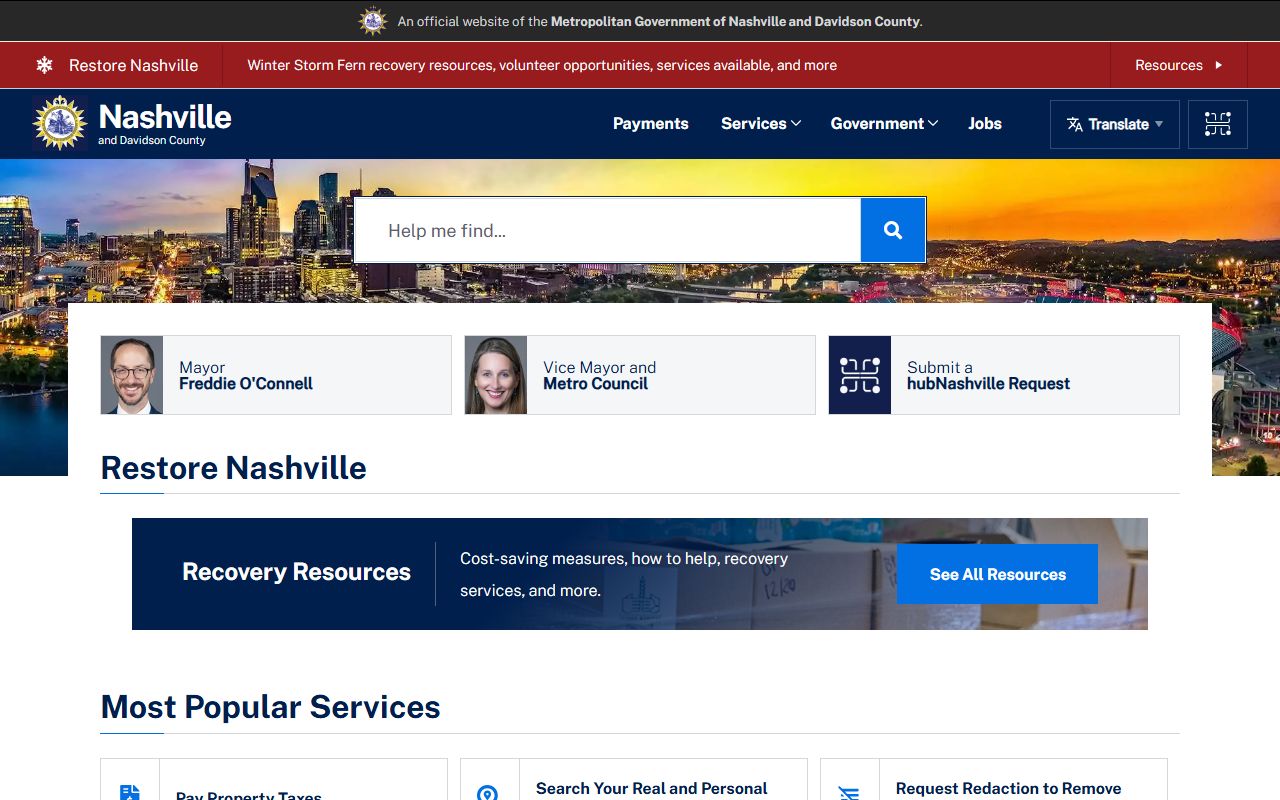
That portal matters because it ties city records, service requests, council information, and public notices into one official source for Nashville residents.
Nashville Public Records at the City Clerk
The City Clerk keeps official city records, council minutes, ordinances, and legislative history. Public records requests also move through the clerk's office, which makes it the right place for a lot of Nashville records that are not police or court files. The office maintains permanent archives for city documents and provides online access to agendas, minutes, ordinances, and resolutions. If you need the paper trail behind a vote or a city rule, the clerk is usually the right place to start.
City records can be more specific than they look. A resolution may have a meeting packet. An ordinance may have a public hearing trail. A records request may point you to a different department once the clerk checks the file. That is normal. It is also why Nashville public records searches work better when the request uses the exact office name and a narrow date range. The clerk can help you find the legislative side of a city issue, while the department that created the file may hold the rest.
Metro Nashville Network streams council meetings and public events, and the city clerk path works with that record trail so residents can tie a meeting video, an agenda, and the final ordinance together. That is one of the reasons the city clerk remains a core Nashville public records office.
The City Clerk page at nashville.gov/departments/council-office/city-clerk is the key source for Nashville public records tied to city ordinances, minutes, and legislative history.
The city clerk office is in the Metro Courthouse at 1 Public Square, Suite 204, Nashville, TN 37201, and the phone number is (615) 862-6780. The office also supports research into historical city records, which is helpful when a Nashville public records request reaches back to older metro actions.
Nashville Public Records and Police
The Metropolitan Nashville Police Department handles requests for incident reports, accident reports, and other police records. Open records requests can be submitted online or in writing, and the records division may require a valid ID for some requests. Active investigations are not open to the public, but closed reports and releasable records can often be obtained through the records unit. That makes the police records division a key public records office for Nashville when the search starts with a crash, a call for service, or an incident number.
Police records are often the kind of file people need fast, but they also tend to need the clearest request. If you know the date, location, report number, or name tied to the file, the records division can move faster. Nashville public records searches involving police data also tend to include accident reports from the third-party vendor and standard copy fees for incident reports. That is a normal part of the process and not a sign that the record is closed. It just means the office is matching the release to the file type.
The police records page at nashville.gov/departments/police is the best local source for Nashville public records tied to incident reports, accident reports, and police records requests.
For city court or other judicial research that extends beyond the police records file, the Tennessee courts public case history portal can help with appellate matters and statewide case history, while the local county clerk and criminal court clerk remain the right offices for Davidson County records.
Useful records to ask for first include:
- City council minutes and ordinances from the City Clerk.
- Incident and accident reports from police records.
- Public records request files tied to city departments.
- Historical meeting packets or resolutions from the clerk archive.
- County court or criminal case records when the file moves into Davidson County.
Nashville Public Records and Archives
Metro Archives is the historic side of Nashville public records. It holds Nashville and Davidson County marriage records from 1788 to February 2017 and offers three online indexes that cover different time periods. Print indexes are also available for marriages from 1789 to 1863. That makes the archive useful when a name appears in older records but not in the current city or county system. It is a research room, not a quick counter stop, but it is one of the most useful places in the city for historic searches.
The archive is part of the Nashville Public Library system, and staff can help with digital, microfilm, and original documents. That gives Nashville public records searches a way to move backward in time without losing the trail. If the record you want is older than the city clerk's working archive, Metro Archives is often the next step. It is also a good example of how Nashville public records move across city, county, and library systems instead of staying in one place forever.
The Metro Archives page at library.nashville.gov/metro-archives is the best source for Nashville public records research when the record is historic or tied to older marriage indexes.
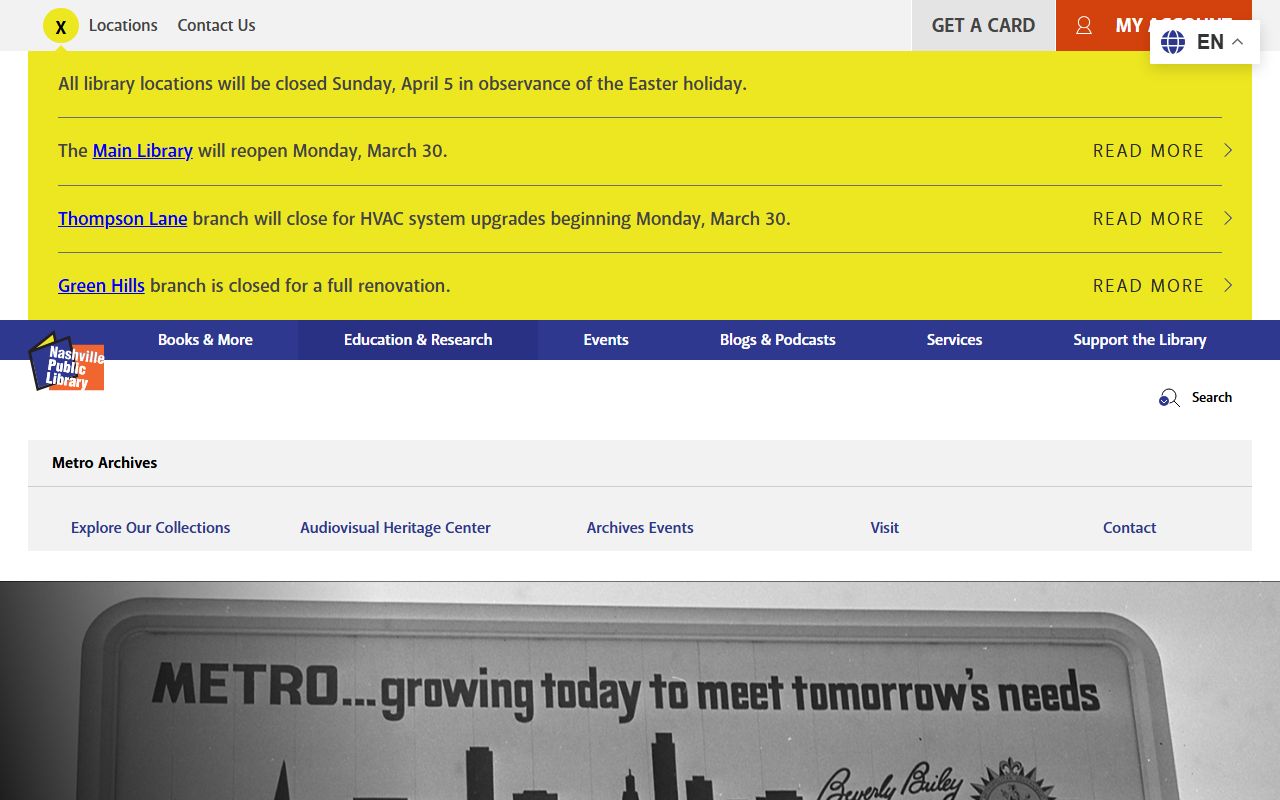
That image fits the archive side of the search because historic records in Nashville often move from the live office to a research collection.
For older county records beyond the archive shelf, the Tennessee State Library and Archives is another useful fallback. It can help when Nashville public records searches need indexed minutes, court history, or older state-held material.
Search Nashville Public Records
Start with the office that owns the file. If you need a city document, the city clerk is the first stop. If you need a police report, use the police records division. If you need an older marriage entry or historic city paper, move to Metro Archives. If the matter shifted into county court or county land records, the Davidson County offices take over. That is the basic Nashville public records pattern.
Use this simple search path when the record is not obvious:
- Name the office that likely created the file.
- Add the date, report number, ordinance number, or party name.
- Ask for inspection first if you only need a look.
- Request a certified copy only if the other office will require it.
- Move to county or archive sources when the city office points you there.
That approach fits the Tennessee Public Records Act and the guidance from the Office of Open Records Counsel. The state records policy also notes that clear requests, correct custodians, and enough detail help offices respond faster. In Nashville, that usually means the city clerk, police records division, county clerk, or archive collection depending on what the record actually is.
Davidson County Public Records Crossovers
Nashville public records often overlap with Davidson County public records. The county clerk at Howard Office Building keeps county commission minutes, monthly county court records, marriage licenses, business licenses, vehicle work, and passport processing. The Criminal Court Clerk keeps criminal case files. Metro Archives keeps older marriage records. If your Nashville search needs one of those files, you have moved out of the city office and into the county system.
The county clerk page at nashville.gov/departments/county-clerk is the right backup for Nashville public records that are really held by Davidson County. The Criminal Court Clerk page at ccc.nashville.gov covers criminal case access and the CaseLink Public Inquiry System. That split helps a lot when a Nashville search starts with a city question but ends in a county file room.
Because Nashville and Davidson County are consolidated, the same resident may use a city page, a county page, and an archive page in one search. That is not a problem. It is the way the records are organized. The key is to keep the office names straight so you know where the file actually lives.
Accessing Nashville Public Records
Fees, copy rules, and response times vary by office. The city clerk, police records division, county clerk, criminal court clerk, and Metro Archives each use their own process. Under the Tennessee Public Records Act, inspection is often free, but copies, certification, and staff time can add a charge. That is why asking for the right file the first time matters so much. A narrow request is usually better than a broad one.
The Tennessee Open Records Counsel at comptroller.tn.gov/about-us/learn-about-our-office/open-records-counsel.html and the Comptroller's public records request page at comptroller.tn.gov/about-us/public-records-requests.html are the best state support links when a Nashville request needs help finding the right custodian or framing the request. For historic material, TSLA at sos.tn.gov/tsla is useful. For appellate or statewide court history, the Tennessee courts public case history portal at tncourts.gov/courts/supreme-court/public-case-history is a better fit.
The state Open Records Counsel page can help when a Nashville public records request needs a better custodian path or a clearer description of the file.
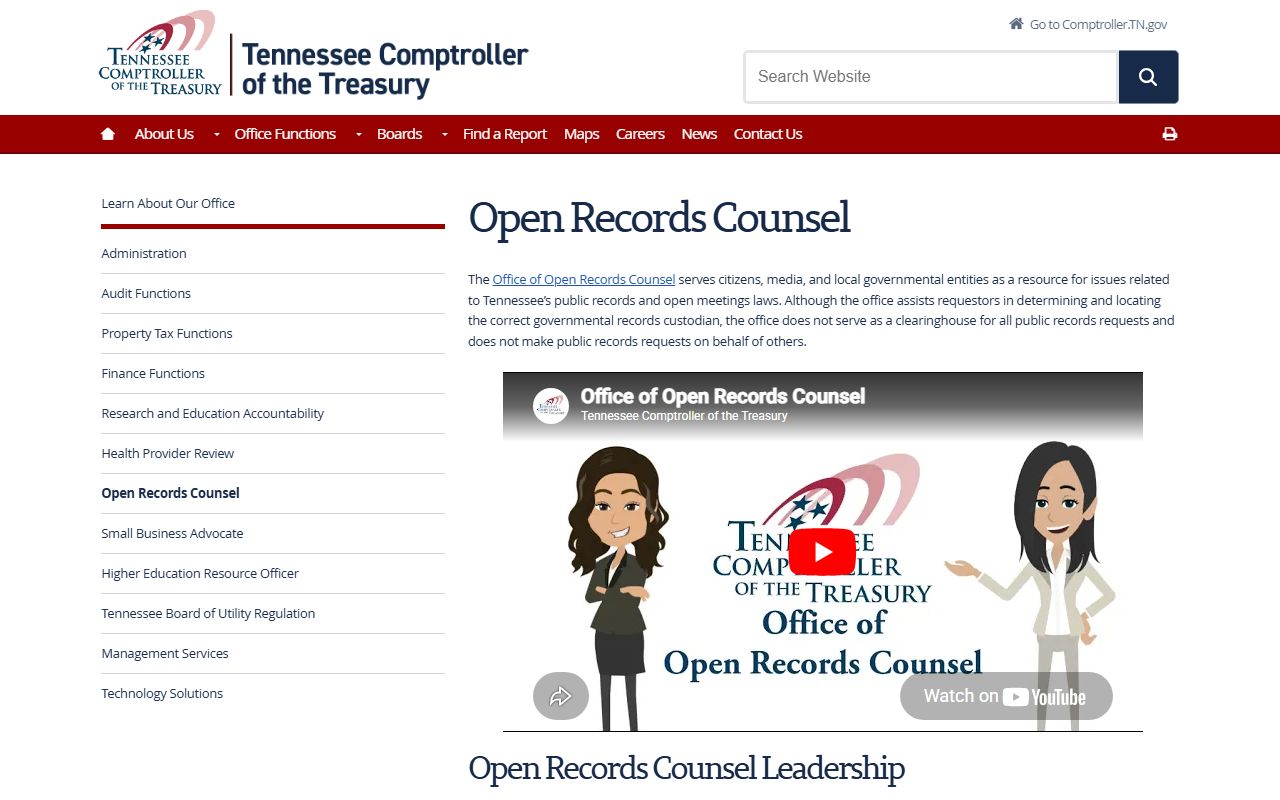
That state resource is useful when a city office needs more detail, a county office needs a narrower request, or the record sits somewhere in between.
Note: If you are not sure whether the file is city, county, or state, start with the office that created it and ask for the next custodian only if the first office does not hold the record.